

Welcome, First, an overview of what this is about...
As you may already know, in the HVAC/R industry, when running condensate piping (as part of the air conditioning/heating or refrigeration equipment installation) it has always been standard practice to field produce a required trap. There are only a couple of options available to complete this task, neither of which is very practical. The most common method of accomplishing this is using a series of 90˚ fittings. The second, is using a marketed device that has been produced from a standard piece of pipe and re-formed into something that looks like a horizontal “P”. The first and foremost problem with either one of these is the constant hassle of cleaning and/or clearing restrictions that often develop in traps. These traps once glued into place (or should be! Or else will most likely leak) eliminate any practical means of performing the necessary task without cutting it out (or apart), then having to mend it back together or re-construct a whole new one. This all stacks up to more unnecessary time and money for the contractor and the end user (customer)!
What is C-trap?
The "C-trap" (U.S. Patent No. 11,585,566) is specifically designed to work in conjunction with HVAC/R equipment that produces condensation in its normal operation. It is designed to collect and retain a given amount of condensation (that is continuously produced by the equipment) in order to break a Vacuum like effect also produced by blowers generally contained in said equipment, thus allowing the accumulated condensate to continue draining from the equipment, through the C-trap then piped off to a nearby drain or runoff.
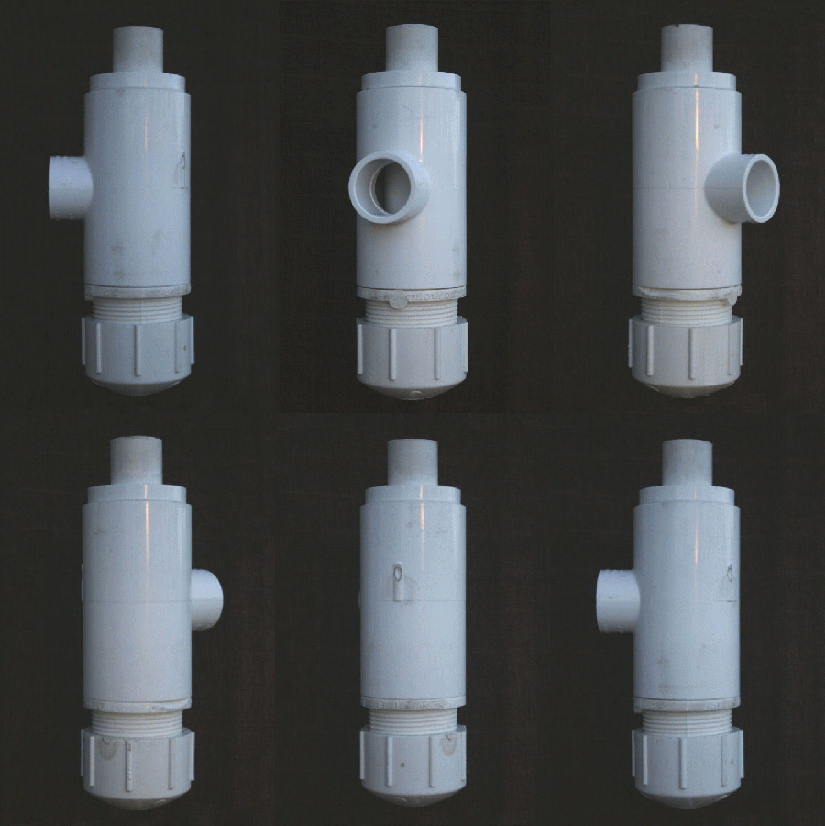
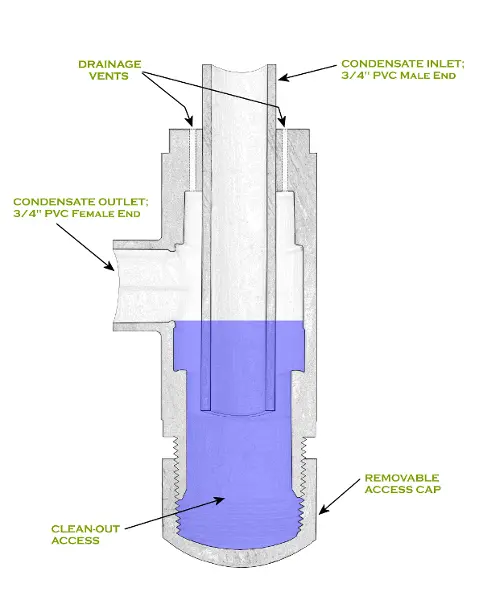
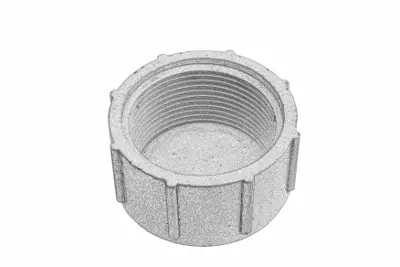
Finally a condensate trap providing improved air seal for the condensate drainage system of a heating, ventilation, air conditioning, and refrigeration (HVAC/R) equipment. The trap includes an interior reservoir containing a volume of condensate to create a seal between the top inlet pathway and the side output. The interior reservoir can be accessed through a clean-out access at the bottom, by removing a removable cap, for maintenance and inspection. Vents are engineered into the design to allow for proper drainage of the accumulated condensate that is continuously flowing through, as well as an early detection of problem conditions.
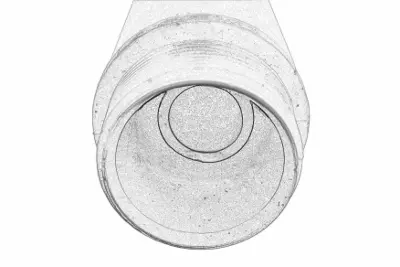
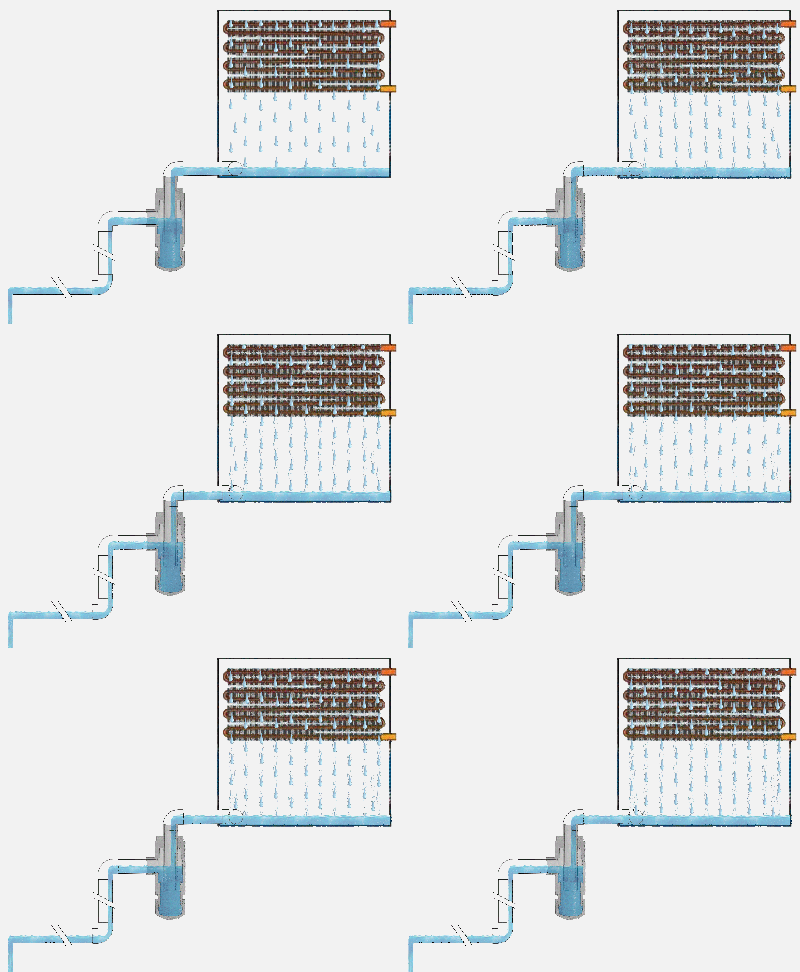
An example of C-trap's intended purpose
When the C-trap is installed and applied in an air conditioning or refrigeration system, it would mount in line of the evaporators condensate drain line (as illustrated).
When an air conditioning or refrigeration system is running, the cold evaporator collects moisture from the air that flows through it (as a natural part of the process of conditioning or cooling the air) as the condensation builds up on the coils it runs down and accumulates in the condensate pan internal to the unit. As the water begins to fill up in this pan it is channeled to a drain located near the bottom of the pan thus allowing it to be piped off to a remote location of choice. It is this piping at the closest point to the evaporator unit is where the C-trap device would be implemented. The accumulated water from the evaporator's condensate pan would be piped directly to the top of the C-trap device allowing the water to enter in through the condensate inlet (as shown above). As it accumulates it fills up the bottom of the C-trap device until the water level reaches the condensate outlet (as shown above) at which point the water will continue to run through the condensate outlet through piping attached at that point and ran to a remote location of choice.
BENEFITS OF USING C-trap
* Reduce material cost, but most of all time/labor cost. Not on just the initial installation, but on future serviceability as well!
* Built-in drainage vent to eliminate vapor-lock, allowing for proper run-off of extended piping!
* The most practical and efficient condensate trap in the HVAC/R industry!
* It's compact design (less space is required than standard condensate traps) allows installation in tighter locations!
* Designed for more versatile applications than other manufactured traps!
* Features a removable cap to access the clean-out to inspect and remove any slime and debris build-up or restrictions!
* Helps provide a healthier environment by easily allowing the ability to reduce the elements that create bacteria and mold!
* Far more aesthetically appropriate, gives your overall job a much greater professional appearance!