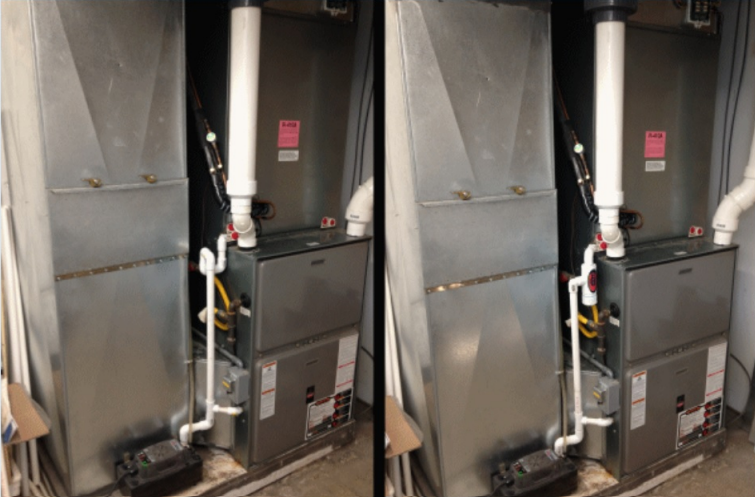
The Evolution of Condensate Traps
Since the establishment of mechanical cooling in the early 1900's, managing the significant amount of constant accumulated condensation in HVAC/R systems has always been vital to preventing water damage comparable to a roof leak or pipe burst. Yet, condensate drainage remains one of the most overlooked aspects of an HVAC system. While many people forget to change air filters, drainage issues are even easier to ignore, often going unnoticed until considerable damage has already occurred. Because these problems develop gradually behind the scenes, the damage can become catastrophic before it’s ever discovered.

Size & Pressure Comparisons
The C-Trap’s compact design allows for easier installation and greater efficiency. Below are comparisons of C-Trap versus traditional traps:
The pictures below display actual dimensions of C-trap compared to some of the other most common condensate traps. Also listed, is the current results of pressure resistance tests we've performed. The ratings noted next to each corresponding trap are both positive and negative static pressures (InWC) at the precise moment when blow-by occurred.
C-Trap Dimensions
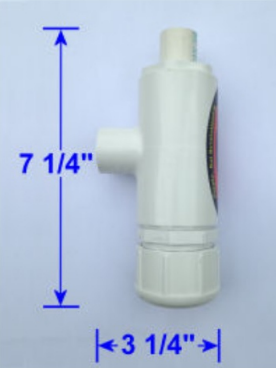
The physical size of C-trap is actually a little smaller than the amount of space generally required to accommodate any other standard traps (particularly the traditional field made series of 90's). In fact, one of the primary motives behind C-trap's design is compact-ability.
+ 3.00" w.c.
- 9.25" w.c.
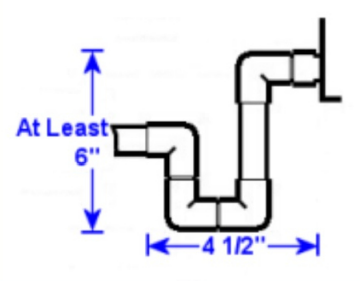
90-Degree Field-Made Trap Dimensions
In most applications it's the width dimensions that become the most critical. The minimum space required for the field made trap is 4 1/2" in width at the very least.
+ 2.90" w.c.
- 7.50" w.c.
P-Trap Dimensions
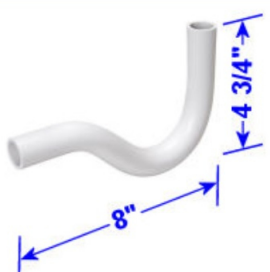
While the "P" trap design is even longer then that, at, at least 8" or more.
+ 1.15" w.c.
- 5.00" w.c.
SmartTrap Dimensions
As for the "SmartTrap", they offer two different sizes and additional pieces to use with their trap (which extends the width even further). However, the larger one being at 9 5/8" height). To use the additional piece for a vertical outlet, extends the width by another 3" at the very minimum (making it 9 1/4" in overall width).
Pressure resistance tests have not been performed on this trap...
Yet!
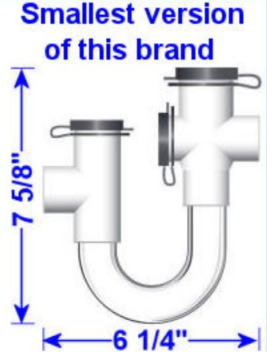
The other factor in the dimensions to consider is a drainage vent after the trap (which is often overlooked during a field installation), in the C-trap it's built-in, where as all other standard traps (including "SmartTrap") it is additional time, material and space to install.
Field Installation comparisons
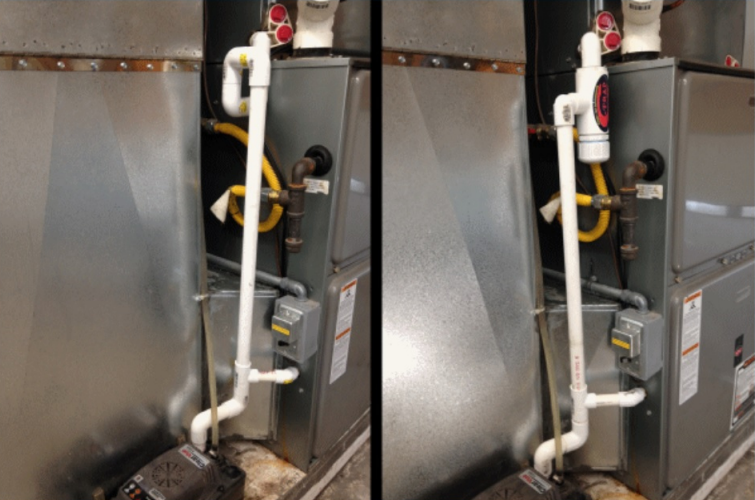
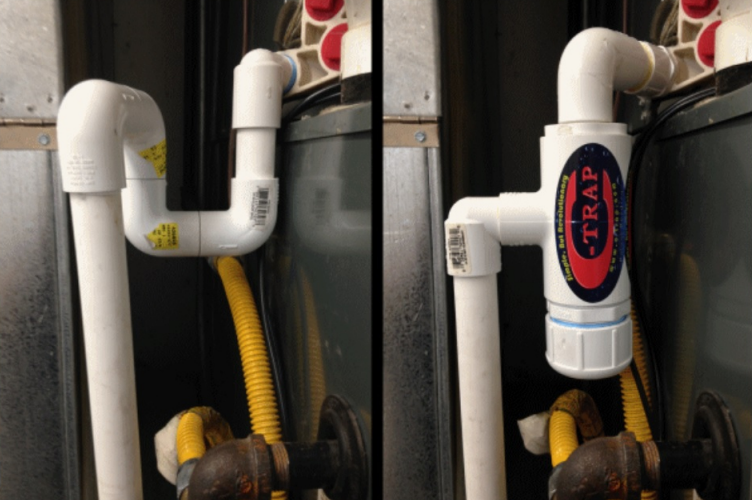
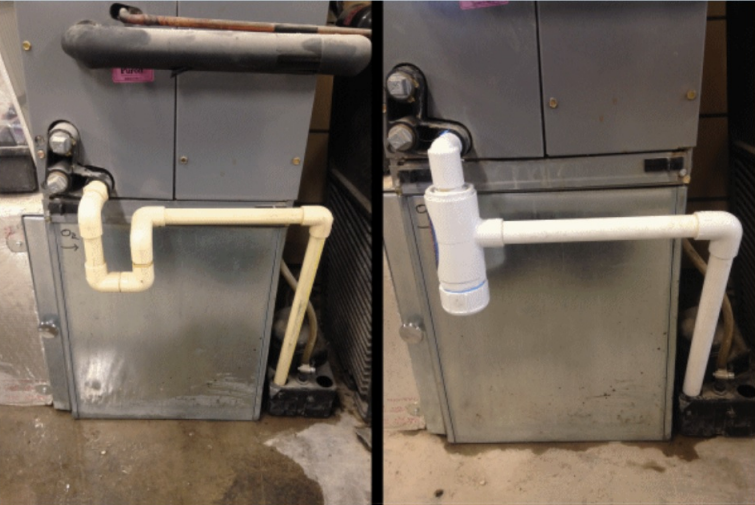
Below are a couple of actual jobs with side by side comparisons and a breakdown of time and material costs (based on local rates) for each:
Job #1:
On this job the existing condensate drain was made with CPVC material. So the material cost (on the left) is based on using the same material to re-construct an exact replacement.
| Contractor’s Material Cost: | 4.95 | 16.86 |
| Contractor’s Time: | 12.5 min. | 8.5 min. |
| Customer’s Material Charge: | 8.25 | 25.10 |
| Customer’s Labor Charge: (1 hour min.) | 99.00 | 99.00 |
| Total Customer Charge: | 107.25 | 124.10 |
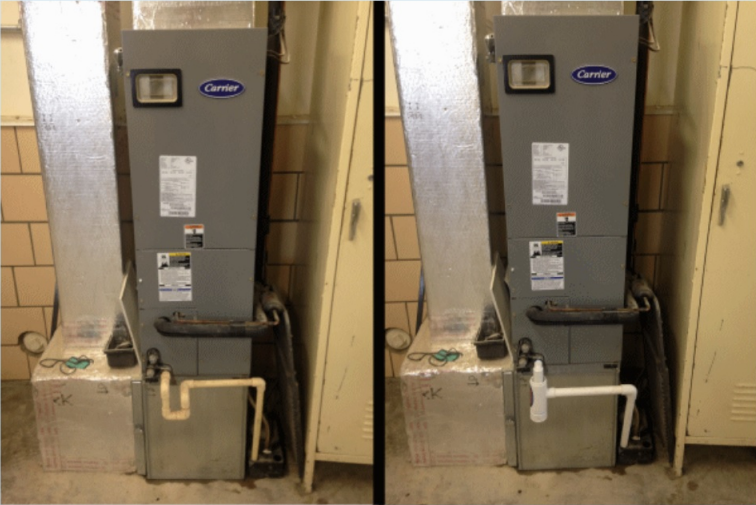
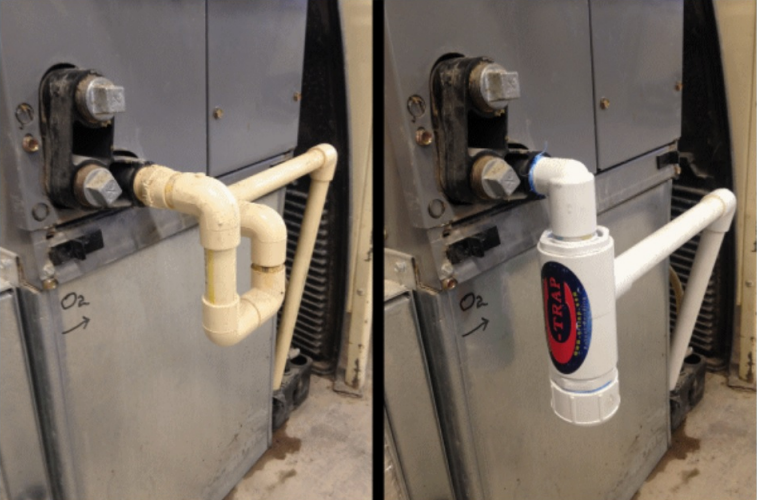
Job #2:
| Contractor’s Material Cost: | 5.50 | 19.28 |
| Contractor’s Time: | 20.0 min. | 15.0 min. |
| Customer’s Material Charge: | 9.17 | 32.14 |
| Customer’s Labor Charge: (1 hour min.) |
99.00 | 99.00 |
| Total Customer Charge: | 108.17 | 131.14 |